
@EUCC Sermons
TO WATCH LIVE ON SUNDAY AT 10 AM, CLICK on VIMEO
2026.10.18 | Release & Perseverance
Good morning Beloved!
Recently, I had a couple of conversations about whether to include some particular pieces of music in our worship service. For one of those compositions it was pointed out to me that, although the composer was known to have written some beautiful and beloved hymns, the author had also credibly been accused of misdeeds and unethical behavior. And while I agreed with the decision to not use that music, it sparked some philosophical and theological reflection within me.

2026.10.11 | Builders & Sharers
Fifteen years ago, during Eden Church’s Small Groups and Pilgrims Potluck, Eden did not set out to start programs. Eden listened.
Padres Unidos was already organizing in this community. Parents were already naming what their families needed. Eden took notice of what was already going on. Relationships formed. Leaders emerged. And out of that listening programs were co-created with the community, Comida Para Cherryland and Las Compañeras.
We met with Padres Unidos again this past Friday. The listening has not stopped. Needs have changed. Strengths have emerged.

2026.10.04 | Opening the Door: Listening at the Door
This morning’s text from Revelation was likely the inspiration for a well-known painting by an artist named Werner Sallman. Now, you may not have heard of Werner Sallman, but I’d be willing to bet that many of you are familiar with his work. I wouldn’t put his work in the category of “fine art,” that you might see in a museum, but his paintings are widely known and much beloved by many.

2026.09.27 | Looking Back to Look Forward
Good morning Beloved!
Although I have been playing guitar since I was in middle school, I had never tried to play a ukulele until about ten days ago. Although I certainly anticipated that learning to play it would require some adaptation, I largely assumed it would be more of a cerebral challenge that a physical one. You see, the ukulele is tuned differently from a guitar and while the chord shapes are similar to those for the guitar, the pitches are different. So the shape that produces a D chord on a guitar, produces a G chord on the Uke. And the shape that produces a G chord on a guitar, produces a C chord on the Uke. So I assumed learning to play the Ukulele would largely involve remapping my synapses so that my brain would transpose the pitches in my mind to a new set of shapes in my fingers.
2026.09.20 | Many Members, One Body
No one carries the whole story of Eden. Some of us carry decades. Some carry a few months. Some know Eden through Sunday worship; others through our direct services. Different threads. One story.
Or, as Paul says: many members, one body. Muchos miembros, un solo cuerpo.
2026.09.13 | Sacred Rest: Where the Wild Things Praise
Church, this month, Christians around the world observe the Season of Creation, remembering God as Creator and Sustainer of all life. And as part of our Sacred Rest series we have ventured into Meditation, Camping, a Taizé worship service, participated in rituals, had a Nature Walk, and just yesterday morning, we had 24 church and community members as part of a Spanish language Emotional Wellness Healing Circle Workshop with Pastor Rhina Ramos from Ministerio Latino. And as Pastora Rhina is Salvadoreña, of course there were pupusas. We also had wonderful guitar music from the illustrious Peruvian singer, Rosa Los Santos.
2026.09.06 | Sacred Rest: The Power of Ritual
I first moved away from my home town in my early twenties. I had been a commuter student at college, and had lived in a few different student apartments, but was never more than a 20 minute drive from my family home. So my first real encounter with homesickness, besides being away at summer camp as a kid, was when I moved half a state away to pursue a Master’s degree.
2026.08.30 | Leaning into Stillness
Good morning beloved!
Over the last month, we have been exploring the idea of sacred rest and considering some of the spiritual practices that people routinely engage in. Today, I would like to talk a little bit about the ancient practice of meditation. And then I will invite you to join me as I lead us through a guided meditation.
2026.08.23 | Song, Spirit, & Release
In the tradition of the contemplative community of Taizé, France, there is no written sermon for this service. We invite you to find sacred rest in the hearing of scripture and music.
2026.08.16 | Sacred Rest: The Creative Impulse
It is 1982, the summer after I graduated from high school. I am 18, and my three friends and I are power-walking through the Louvre museum, as one does when one has allotted only three hours to see a museum that has a collection of over 500,000 art objects. In this museum full of famous paintings, we are fixated on making our way to perhaps THE most famous painting. We stride through the galleries without pausing. But in one gallery, out of the corner of my eye, I notice a painting that draws my attention. I turned to look at it, and it seems as though time stops. I am totally captivated. I’ve never seen a reproduction of the painting before, and I have no idea who the artist is, but there’s something about it that draws me in. Something about the contrast of light and dark, something about the main figure that I see in the painting, something about the quietness of the scene that makes me—compels me—to stop and notice. Time seems to stop for a moment. As I remember this moment in my mind’s eye, all the sound in the room disappears. All the voices, the movement fade away. And I am alone in the room with this painting.
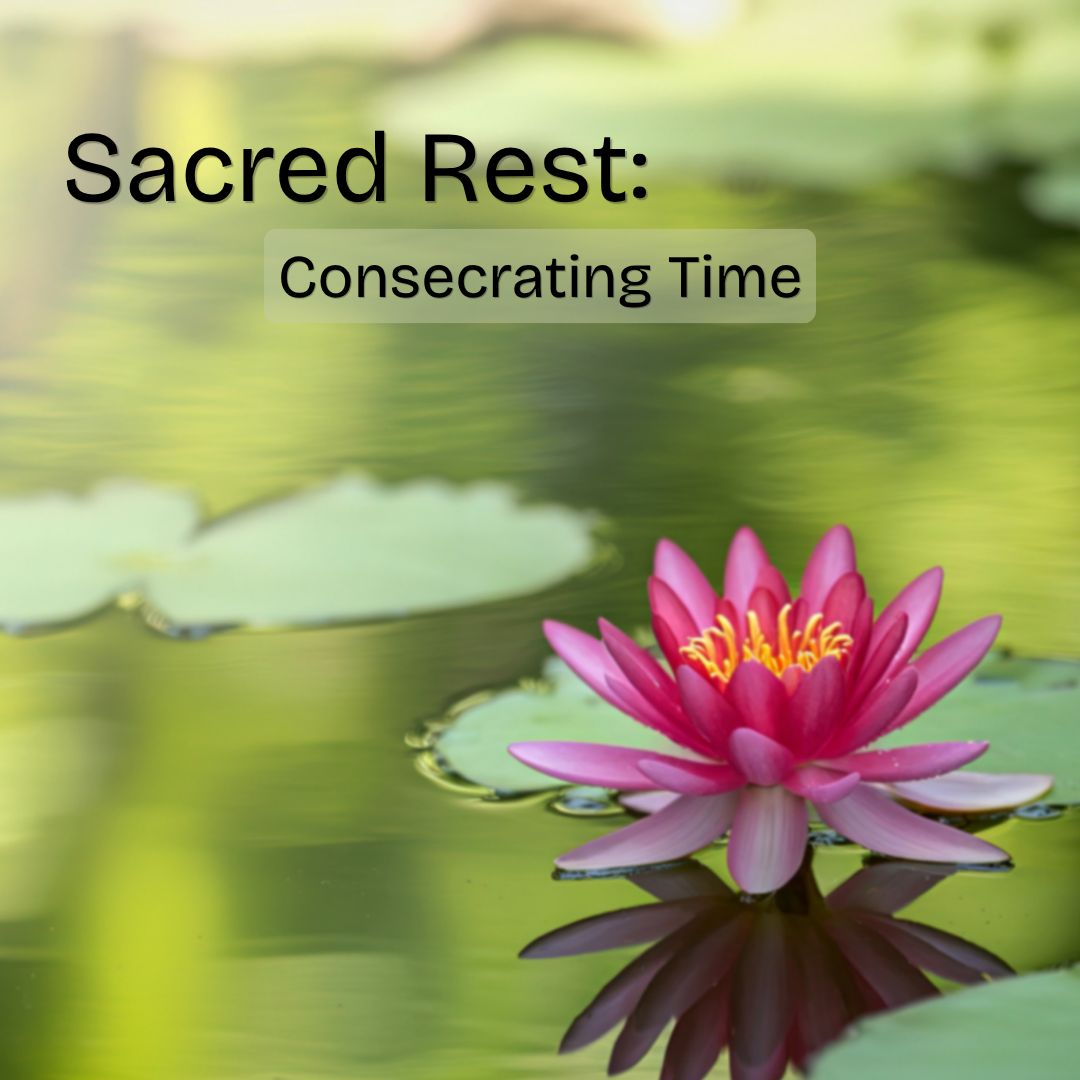
2026.08.09 | Sacred Rest: Consecrating Time
In the beginning, God consecrated not a place, but time.
Read the opening of Genesis slowly and you notice something easy to miss. God makes light and calls it good. God makes land and sea, sun and moon, creatures of every kind—tob, good, and good, and very good. But the first thing in all of Scripture that God calls holy is not a mountain. Not a garden. Not a temple. It is a day.
“So God blessed the seventh day and hallowed it.”
Before there was ever a sanctuary, there was a Sabbath.

2026.08.02 | The Way Home: In An Age of Sirens
Nearly three thousand years ago, someone in the Greek world started telling a story about a soldier trying to get home. And we have never stopped telling it. The Greek poem is attributed to the poet Homer. It would be written down centuries after him. Today, Tennyson’s echo still reverberates, “To strive, to seek, to find, and not to yield.” James Joyce moved the whole Odyssey into one ordinary Thursday in Dublin. Tolkien, who loved Homer, quietly refused him—his hero is not a clever king but Samwise Gamgee, an ordinary gardener who keeps walking no matter what. Now there’s an Face of Faith! And the Coen brothers set the story in Depression-era Mississippi with a bluegrass soundtrack and a river baptism. The epic fits nicely into Nolan’s filmography as he is beholden to what happens when extraordinary human ability collides with profound moral complexity.
2026.07.26 | Mary Magdalene
Today we bring our summer worship series about the Faces of Our Faith: Bold and Untold Stories to a close. We’ve explored 14 different figures from that Bible, told their often-untold stories, and heard how their faith had an impact on those around them. We’ve also heard wonderful testimony from our own congregation about the faithful folks who influenced their spiritual journeys. I’m grateful to Lorenzo, Dave, Jeffra, Bob, Allie, Sam, and Becca for having the courage to tell their stories!
The final story in our series is Mary Magdalene, which is very appropriate, since last Wednesday, July 22 was Mary Magdalene’s feast day. I love Mary Magdalene. I have a stack of books about her, I’ve taken classes and workshops about her, and I love sharing the things I’ve learned about her. I have so much information to share that I could preach an entire sermon series on her. Unfortunately, I only have ten minutes today. So I’m going to offer you some of this information in the form of a list: seven things you may not know about Mary Magdalene, but should.

2026.07.19 | The Ethiopian Eunuch
On Pentecost, we remembered the coming of the Holy Spirit to the disciples through tongues of fire and the ability to speak and understand many languages. After that event, the Book of Acts says that three thousand people received the message and were baptized. The Apostles then began preaching the gospel in Jerusalem, telling people about Jesus’ resurrection and proclaiming that his New Creation had begun. They even taught in the courtyards of the Temple. The number of converts was growing. All of this angered the Temple leadership. The disciple Stephan was stoned to death
Now we arrive at today’s reading from the 8th chapter of Acts begins by telling us that “a severe persecution began against the (Jesus followers)...and all except the apostles were scattered throughout the countryside of Judea and Samaria.” They continued preaching the gospel and gaining new disciples wherever they went. The apostle Philip went down to the city of Samaria proclaiming the Messiah to them and performed many miracles. The people were amazed and many converted.
The next morning, scripture says that the Angel of the Lord appeared to Philip and told him, “Get up and go toward the south to the road that goes down from Jerusalem to Gaza.” As you heard earlier, Philip does so and there encounters the Ethiopian eunuch.
2026.07.12 | Anna
At the Temple, then, several strands of Israel’s long story come together: Mary and Joseph arrive with their child; Simeon takes Jesus in his arms; and Anna, a prophet named for grace and descended from a scattered tribe named for blessedness, recognizes the significance of the moment. Luke says she immediately begins speaking about Jesus to all who were looking for the redemption of Jerusalem.
That phrase suggests that Anna was part of a larger community of hope. She apparently knew who was still waiting, who was still praying, and who had not given up on the possibility of redemption. And when the moment came, she knew where to take the news.
El nombre de Ana también nos recuerda a otra gran mujer de la Biblia: Ana, la madre de Samuel. Ella llevó a su hijo al templo y cantó un himno sobre un Dios que levanta a los oprimidos. Ese mismo canto inspira más adelante el Magníficat de María, la madre de Jesús.
Ahora aparece otra Ana en el Templo y ella reconoce en el niño Jesús al Mesías esperado y comienza a anunciarlo a todos. La fe de Ana fue formada por una vida de oración, espera y esperanza. Nos recuerda que Dios suele revelar sus mayores sorpresas a quienes permanecen atentos y fieles, aun después de muchos años de espera.
Anna’s face of faith is one shaped by a long life: by grief and memory, prayer and community, identity and hope. She represents those people whose contribution to the story may occupy only a few verses, but whose years of faithfulness have prepared them to recognize something important when it finally appears.
2026.07.05 | Lydia
Lydia was originally from what is now Turkey. She was a dealer in purple cloth, which likely means she worked in a valuable trade. Purple goods were associated with wealth, status, and influence in the Roman world.
The text presents her as a person of agency. She speaks for herself. She responds to Paul’s message. She and her household are baptized. And then she invites Paul and his companions to stay in her home. That detail matters.
In the earliest years of the church, homes were central to Christian life. Before there were church buildings, Christians gathered in houses for prayer, teaching, meals, fellowship, and song. So when Lydia opens her home, she is not simply being polite. She is creating space for the church to take root in Philippi.
Esta mañana continuamos nuestra serie Rostros de Nuestra Fe con la historia de Lidia. Aunque su historia ocupa pocos versículos, su importancia en la iglesia primitiva fue enorme.
Lidia era una comerciante de telas de púrpura, un producto asociado con la riqueza y el poder. Cuando Pablo llegó a Filipos, la encontró junto a un grupo de mujeres reunidas para orar a la orilla de un río. Lidia escuchó su mensaje, abrió su corazón y fue bautizada junto con su familia.
Después, abrió también las puertas de su casa. En una época sin templos cristianos, los hogares eran lugares de oración, comida, canto y comunidad. La hospitalidad de Lidia ayudó a crear un espacio donde la iglesia en Filipos pudo echar raíces. Su fe se expresó en hospitalidad, liderazgo y generosidad.
Desde sus comienzos, la Iglesia también fue una comunidad que cantaba su fe y esperanza. Y esa tradición continúa en nuestra herencia congregacional: el primer libro publicado en lo que hoy es Estados Unidos fue un libro de salmos preparado por iglesias congregacionales en el año 1640. La historia de Lidia, nuestros himnos y nuestra herencia nos recuerdan una misma verdad: la fe no es pasiva; se vive y se practica en comunidad.

2026.06.28 | Shiphrah & Puah
Over the years, God has continued stretching our imagination. We've learned that compassion is only the beginning.
It's one thing to hand someone food; it's another to ask why they are hungry.
It's one thing to welcome immigrants; it's another to organize so every immigrant can flourish with dignity.
It’s one thing to pull babies from the Nile; it’s another to go upstream to stop the babies from being thrown in.
That's why you've heard us say that we're moving from welcoming to belonging, from charity to solidarity, from simply responding downstream to crises toward working upstream to transform the conditions that create them in the first place. That isn't because we've abandoned mercy. It's because mercy keeps leading us toward justice.
La historia de Sifrá y Puá nos recuerda que el mal casi nunca se presenta como mal al principio. Muchas veces llega disfrazado de órdenes, políticas o simplemente de "cumplir con mi trabajo". Ellas escogieron obedecer a Dios antes que al faraón, y su compasión se convirtió en valentía y resistencia frente a la injusticia.
Al reunirnos hoy para nuestra Reunión Anual, también nosotros preguntamos qué clase de iglesia queremos ser. Sí, seguiremos alimentando, acompañando y dando la bienvenida. Pero Dios también nos llama a ir más allá: no solo rescatar a los bebés del río, sino ir río arriba para detener las fuerzas que los empujan al agua. Por eso hablamos de pasar de la caridad a la solidaridad, de la bienvenida al verdadero sentido de pertenencia, trabajando para transformar las causas de la injusticia y no solo sus consecuencias.
2026.06.21 | Shadrach, Meshach, and Abednego
This week in our Faces of Faith series we consider the remarkable tale of Shadrach, Meshach and Abednego from the book of Daniel. It is a story where the main characters are challenged, face intense tribulations, but remain true to YHWH and are profoundly rewarded for their faithfulness. But we first need to look at the context of their story.
In 597 BCE, the Babylonian King Nebuchadnezzar II declared war and laid siege to the city of Jerusalem, capital of the Kingdom of Judah. Jerusalem surrendered and the Babylonian army laid waste to the city, setting much of it on fire. Nebuchadnezzar issued a decree that all smart and capable Israelites be brought to Babylon. So its King Jehoiachin (Juh-HOH-wuh-kihn) was carried off, along with members of the royal household and many sacred treasures. Among the first wave of captives were four young men from the house of David named Daniel, Hananiah, Mishael, and Azariah. Scripture tells us that “God gave these four young men knowledge and skill in both books and life.”
They were brought to Babylon to be trained for a period of three years, after which they would be compelled into King Nebuchadnezzar’s service. They were given new names that honored Babylonian deities: Daniel was named Belteshazzar, Hananiah was named Shadrach, Mishael was named Meshach, Azariah was named Abednego.
So they had lost their country, their homes, their way of life, their families, their language, and even their names. They were now living in a strange land, the land of their conquerors and were required to serve King of the captors.

2026.06.14 | The Daughters of Zelophehad
In the catalog of memorable biblical characters, the daughters of Zelophehad are definitely not at the top of the list. In fact, I’m willing to guess that until today, most of you had never heard of them. Am I right?
Don’t feel bad about that—they are definitely not what Pastor Marvin called “headliners” last week. Their story does not appear in the Revised Common Lectionary, and I have never seen a stained glass image or classical religious painting of Mahlah, Noah, Hoglah, Milcah, and Tirzah. I have never heard a sermon preached about these daughters, and, although I have read the entire book of Numbers, I really have no memory of encountering the daughters in my reading.
And yet, their story is not insignificant. In addition to today’s text from Chapter 27, they are mentioned briefly in Chapter 26 of Numbers, and again in Chapter 36. And they appear yet again in Chapter 17 in the book of Joshua, after the Israelites have conquered the promised land and the land is being apportioned to the twelve tribes. The daughters show up and confront Joshua and the priest Eleazar, and make sure that they remember that God commanded that they be given their father’s inheritance. And it was given to them.
In the patriarchal structure of biblical-era society, property passed from father to son. Women and girls had to rely on their male family members for subsistence and protection. Widows without sons and unmarried daughters without a father or brothers were the most vulnerable in such a community. They had no power and no advocate, and—one would think—no voice.
And yet, these five sisters had courage. They stood up and marched right up to the entrance of the meeting tent and confronted what they saw as an unjust system. “Why should the name of our father be taken away from his clan because he had no son?” they said. “Give to us a possession among our father’s brothers.” Notice that they didn’t weep or ask or beg. They demanded! These disenfranchised women confronted what was unjust, demanded justice for themselves, and proposed a more equitable law—one that would benefit not only these five sisters, but generations of women to come.
These daughters represented the least powerful in their community, and yet they dared to challenge the tradition of the patriarchy.
2026.06.07 | Faces of Our Faith: Eutychus
But if you actually read Scripture, you discover that God seems to have a particular affection for ordinary people. People who appear for only a few verses. People who never preach a sermon or never perform a miracle.
A servant girl. A widow with two coins. A boy with five loaves and two fish. A nameless woman who reaches out and touches the hem of Jesus' garment. They often show up for just a moment. And yet without them, the story itself would be different, lacking even.
I think that's important because sometimes we imagine that faithfulness belongs to the extraordinary. We tell ourselves, "I'm not a pastor. I'm not a theologian. I'm not a saint. I'm just an ordinary person trying to live a good life."
But the good news of Scripture is that God has always been in the business of working through ordinary people. The kingdom of God is built not only by famous leaders, but by everyday acts of courage, kindness, persistence, hospitality, and hope. We are a priesthood of all believers.
In fact, if the Bible teaches us anything, it is that there really are no "minor" characters. There are only people whose stories we have not paid enough attention to.
Cuando pensamos en la Biblia, pensamos en los protagonistas principales: Moisés, David, Pedro, Pablo, María y Jesús; los grandes nombres.
Pero si realmente leemos las Escrituras, descubrimos que Dios tiene una manera especial de obrar a través de personas comunes. Una joven sirvienta. Una viuda con dos monedas. Un niño con cinco panes y dos peces. Una mujer sin nombre que extiende la mano para tocar el manto de Jesús. Puede que aparezcan solo por un instante, pero sin ellos, la historia sería diferente.
Y tal vez eso sea una buena noticia para nosotros. Porque a veces pensamos que la fidelidad es algo propio de lo extraordinario. Sin embargo, una y otra vez, Dios obra a través de personas comunes y de actos cotidianos de valentía, bondad y esperanza.
Quizás no existan realmente personajes «secundarios» en la historia de Dios, sino solo personas a cuyas historias no hemos prestado suficiente atención.