@EUCC Sermons
TO WATCH LIVE ON SUNDAY AT 10 AM, CLICK on VIMEO

2020.08.30 | I Am
2020 has thrown some hard stuff at us: COVID-19 and the inequities in our society that it has laid bare; the continued empowerment of white supremacy by our current president and the evils it manifests in our streets and neighborhoods; the dismantling of a already inadequate immigration system; the overwhelming of our dysfunctional healthcare system; climate change and the droughts and wildfires that come with it; even distanced learning. All of which disproportionately affects the poor and people of color. At times it seems all we can do is cry out. And that’s where our story begins this morning.

2020.08.23 | Should I Stay or Should I Go?
On Wednesday morning, I woke up coughing around 4 am to the distinct smell of smoke drifting through our house. Having experienced a house fire when I was 12 and having lived through the Oakland firestorm of 1991, I was up like a shot to sniff out every door and window, to check the news, and to close the windows.
It was agony to imagine what another week of excessive heat was going to be like with closed windows.
After months of the outdoors being our only respite from sheltering in place, we’ve been driven indoors by the heat and now, this, our ability to cool the house at night was being taken away.
For months now, and especially this week with the heat and smoke, I’ve been feeling a bit like the other 11 disciples in today’s scripture reading must have felt when Peter stood up in the boat in the middle of a storm and attempted to get off and actually walk on water.
Think about it: in the most placid of waters, the most dangerous moment for any boat, canoe, kayak, sailboat with more than one person is that moment when someone decides to stand up, get off, dive off, or disembark. I was once in a sailing class where the entire class was flunked and told to sign up for another class because we couldn’t properly handle what we should do when an idiot diving off the boat caused it to keel over. More than once, Lia and I exhausted ourselves trying to right our kayak after one of us did a crazy disembark at Lake Tahoe.
Of course, for the eleven disciples, the boat situation and Peter’s decision to disembark was much worse than anything I’ve encountered.
Look at what’s happening from their perspective: they had already had a tough day. After listening to him teach for hours, Jesus had commanded them to feed a crowd of over 5,000 people with just five loaves and two fishes. It worked out okay but it was stressful and scary.
Then Jesus had taken them to the shore and gone off by himself to pray. They had boarded a boat and headed across the sea of Galilee, but found themselves helpless in the middle of an overnight storm with wild wind buffeting their boat here and there.
When Jesus came walking toward them, they rightly thought he was a ghost rather than their teacher, a situation that Peter decided would be best rectified by asking for supernatural proof in the form of his being able to walk on water just like Jesus.
I’m sorry if I sound a little irritated by Peter, but for heaven’s sake, if we’re in a boat, in a storm, looking at what could potentially be a ghost, it isn’t exactly the best time for someone to stand up, get off the boat, and try walking across the water.
2020.08.16 | Game Changers
Consider for a moment the question, “What can we learn from Jacob’s family reunion described in Genesis 45?”
One lesson that we can learn is the importance of looking at “the big picture.” In the big picture, Joseph realized that his family was starving and that his father was still alive, and that while he had a million legitimate reasons to hold a grudge against his brothers, and to pay them back for what they had done to him, Joseph gave his brothers what they needed. He granted them grace, and he gave them food and shelter. He was reunited with his family and the familiar things from his home culture again.
A second lesson that we can learn from Joseph is to focus on the future, rather than dwell on the past. In particular, we can learn how to focus on the future that God envisions for us, rather than the past which cannot be changed. Focusing on the future does not mean that we forget the past. It does not mean that we forgive without being asked for forgiveness, or without our treaspasors exhibiting amendment of life. Instead, focusing on the future means keeping our eyes on the prize, keeping our eyes on the upward call of Christ (Phil. 3:4). Focusing on the future reminds us that we have been called to a life of repentance and reconciliation, rather than rage and revenge.
Focusing on the big picture, and focusing on the future, means that Joseph (and all of us) can create a new dynamic, rather than repeating an old one. I am reminded by Joseph’s story of a declaration that my mother often made to my sister and me on the occasions when we would really get into it with each other. Both of us would try to explain that the other was at fault for starting the fight. Mom didn’t even listen to our arguments. She simply said, “I don’t care who started this fight. I only want to know who’s going to end it.”
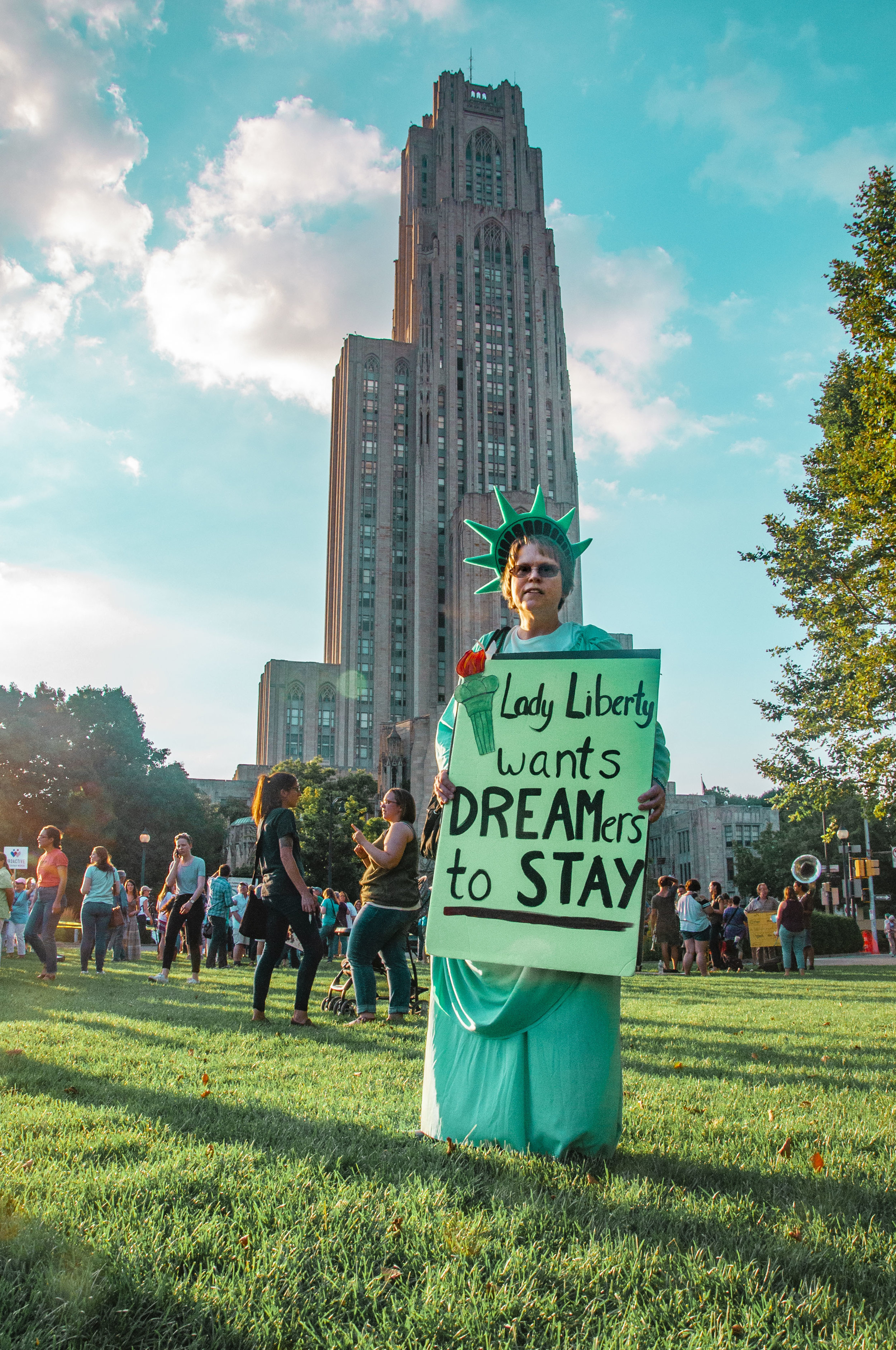
2020.08.09 | DREAMERS UNITE!
Hughes’ opening question, “What happens to a dream deferred?” has been echoing in my head daily since the Shelter In Place Order was announced:
What happens to a dream deferred? What happens to a child who doesn’t have a digital tablet at home, a WIFI connection, and sufficient bandwidth to participate in distance learning classes, or who doesn’t have their own study space to focus on their studies?
What happens to a dream deferred? What happens to a child who misses meals because his school is closed or her parents don’t have a car or gas money to drive to a food pantry?
What happens to a dream deferred? What happens to a child who is confined to a bedroom for days on end, because someone in the house is in isolation? What happens to children who are left without adult supervision, because their parents have to choose between work and homelessness?
What happens to a dream deferred? What happens to a high school graduate who is admitted to a selective university, but whose family has to choose between rent and tuition? What happens to a cosmetology school graduate who can’t open a shop because of COVID-19, and what happens to a university graduate who got all A’s but can’t find a job in the down economy?
What happens to a dream deferred? What happens to a DACA student--a “Dreamer”--who is repeatedly subjected to the bully talk and the bully walk of our nation’s president, who scapegoats them in an effort to rally his base for the general election? What happens to asylum seekers whose cases are frozen in court, who can’t get public benefits or apply for a job because they don’t have a Social Security number?
This past Friday morning, a reporter on NPR interviewed a panel of educators, doctors, and child welfare specialists exploring what they thought would be the impact of the pandemic and economic losses on the children who are growing up in the midst of this pandemic.
The responses ranged from mixed--depending on a variety of social factors--to very grim. One educator in particular expressed the concern that those who are children now might one day be labeled “the lost generation,” as a result of suffering the downside of social disparities related to their race, class, nation of origin, health status, and special needs.
It doesn’t take any effort to feel discouraged or to worry in these times, even if we are not among the “extremely vulnerable” groups in this pandemic.

2020.08.02 | Strange Times
“While it isn’t pleasant to think about God as an opponent, if each of us is truthful about our spiritual journeys, we can probably think of a time when we at least wondered whether God was for us, or against us, in a particular struggle.
Modern psychologists add a further layer of interpretation to Jacob’s story by exploring several psycho-social possibilities for understanding what this wrestling match was all about. Perhaps you can relate. Maybe Jacob was wrestling with his feelings about Laban who had tricked him, sort of like how Jacob had tricked his twin brother, Esau.
A further possibility is that Jacob was wrestling with unresolved guilt about cheating his brother, and harboring all of those icky feelings in his heart for the past 20 years.
No matter which interpretive lens we peer through, or how many lenses we employ, in the end, perhaps we agree that Jacob not only survived his twenty-year ordeal, but he was changed by it.“
2020.07.26 | WHAT I DID FOR LOVE
What’s the craziest thing you’ve ever done for love?
My oldest and dearest friends won’t even blink. They’ll tell you without hesitation that the craziest thing I ever did for love was to fall for someone who was about to leave for Indonesia for two years--and I told her that I’d wait for her.
So that the GenZs in the congregation can better appreciate how crazy this move was, I will explain that I made this decision before modern technology had come to rural East Java where Stephanie lived. That’s right: there were no phones, no TVs, no Internet, no Facebook, no Snapchat, and no Zoom. Imagine that!
Stephanie and I wrote letters to each other using real paper and ink pens, not texts or emails. I bought aerograms in packets of 30. Aerograms are pre-stamped, self-mailing letters made of light blue paper with dark blue and red trim.
I made sure that I always had enough in stock to write at least one letter every day. Nowadays, I can’t even think of when the last time was that I wrote a letter. (Neither can my mother.)
Twenty-eight years ago, by comparison, I wrote Stephanie as many as seven aerograms a day. She kept everyone of them, including the aerograms that she sent to me. I called them “love letters.” She calls them “field notes.” (She’s a cultural anthropologist.)

2020.07.19 | Finding God in Strange Places
“I wonder, have you ever been surprised by where God has shown up in your life?
To answer this question, let’s first consider where it is that we expect God to show up. I imagine that most people expect God to show up in Church. Right?
I think this is why the Shelter-In-Place order is so difficult for many Christians to accept. In this tipsy-topsy world, people of faith would like nothing more than to be in worship—in a familiar place, singing familiar songs, saying familiar prayers with familiar people—so that we might reground ourselves in the knowledge that God is in charge, and that everything is going to be OK.
But then, lo and behold, the County Health Officer and the Governor start pulling back the reins on phasing out Phase 1. . .”

2020.07.12 | A Listening Heart
In the last 20 years, as LGBTQ issues, particularly gay marriage, have come to the forefront of our national and local conscience, I delight in those conversations where I have seen people’s perspectives and political views change not because they were labelled as haters or homophobic, but because they realized what LGBTQ people wanted was simply basic human rights and dignities such as work of their choosing, love, marriage, and family — rights and dignities that straight people are afforded automatically.
So, while Solomon, with all his faults and flaws so like our own, asked for a listening heart so he might govern God’s people, I tip my hat today to anyone, regardless of their past views and behaviors, whose listening heart has changed their mind, their faith, their voice, or their vote. To you, and to your willingness to bring wisdom and a loving heart to all your decisions and actions, we owe a great debt of gratitude.
2020.07.05 | A Good Place for Confession
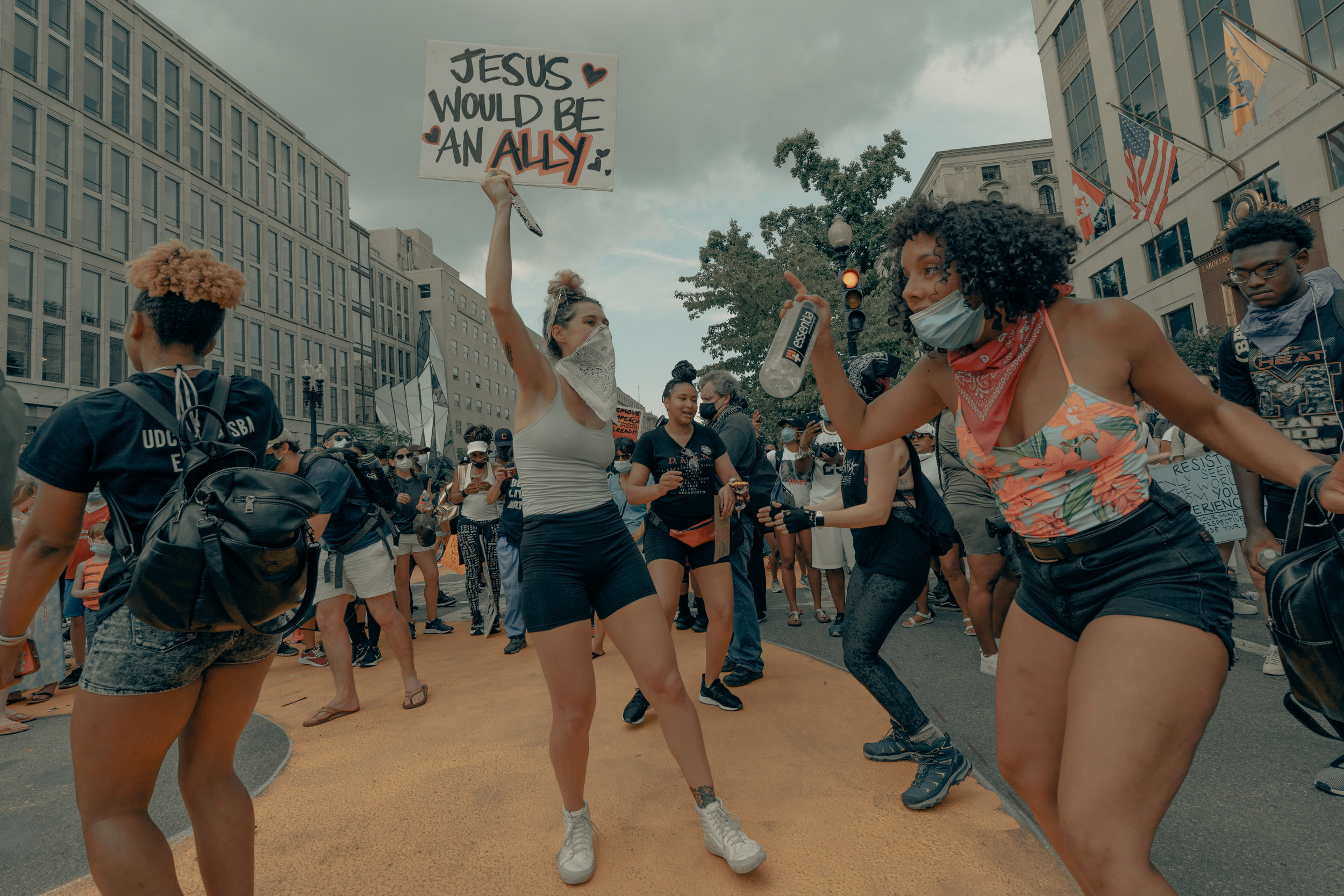
In addition to confessing that racism is America’s original sin, it’s also necessary for us to acknowledge that the Christian Church has a lot of racism to confess, and that congregations like ours (that come out of a Liberal Protestant tradition) aren’t too enthralled with confession. . .
2020.06.28 | Loaves & Fishes
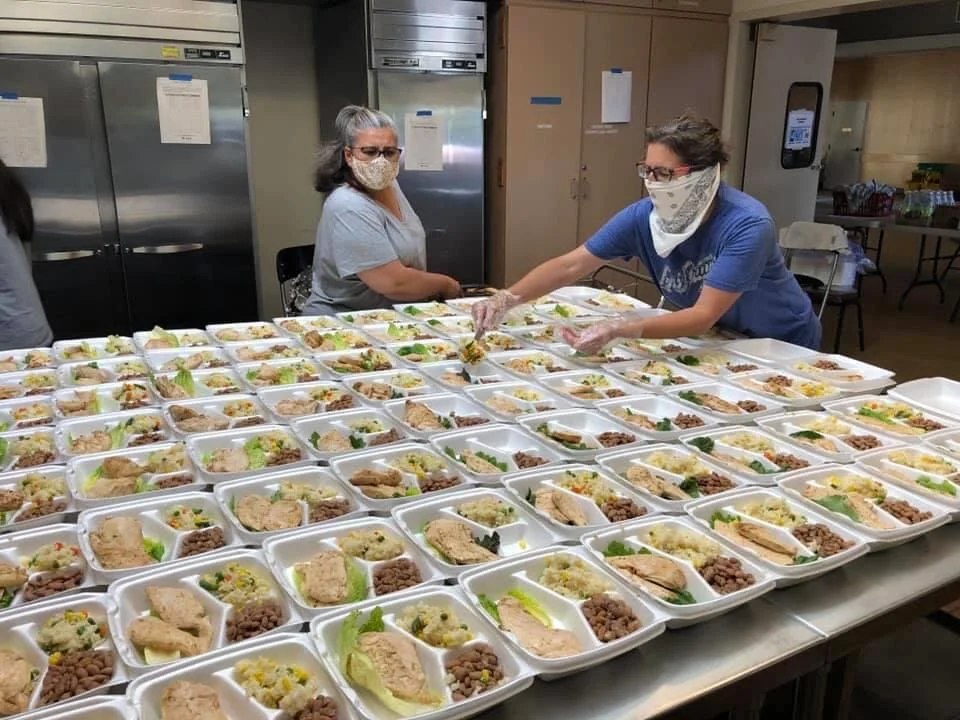
A modern-day equivalent of the “Feeding of the Five Thousand” has unfolded in the Eden Area over the course of the past two months under the banner “UIY Cena Caliente,” or in English, “UIY Hot Meals.”
The program was born out of suffering.
Two counselors from Tennyson High School (Diana, who is employed by the Hayward Unified School District, and the other, Elizabeth, who is employed by La Familia) reached to me and asked me to sponsor one of the World House students, so that they could during the pandemic.
You see, the counselors were getting calls from their students asking them where they could get something to eat, because they couldn’t go to their low-wage jobs to earn a few dollars an hour to buy their own groceries and make their own food.
2020.06.21 | A Father's Love
Today’s scripture reading is a story, a story that Jesus tells to answer a simple but challenging question posed by those who are beginning to oppose him and his ministry among tax collectors and others they heartily disapprove of: Why does he eat with sinners?
One way of understanding the story Jesus tells us is to compare and contrast it with other stories that address the same theme. I did a little poking around in the folktale collections online and found a Ukrainian folktale that provides a useful comparison to the story that Jesus told.
I’ll tell you a shorthand version of the Ukrainian story, which is called “The Ungrateful Children and the Old Father Who Went to School Again.” If you want to read the full story, check out the link I put in the bulletin to a book called Cossack Fairy Tales and Folk Tales on the World of Tales website.

2020.06.14 | DIVINE HUMOR
My favorite Chinese proverb goes like this: “If you want to hear God laugh, make a plan.”
I’m a big fan of planning, and I have the resume to prove it. I discovered the merits of planning at a young age, when planning proved to be helpful in keeping me on track as I was striving to overcome some personal hardships and better myself and my family's situation.
In high school, college, and especially in graduate school, I received formal instruction in planning, and experienced first-hand that sound planning was critical to success.
In the early days of my career, I was fortunate to staff planning committees in two different congregations and work with experts in the field of organizational design.
I have applied these habits and skills in the practice of ministry over the years, and have helped every organization that I’ve served to develop and implement strategic plans. In some cases, I have been an architect of more than one strategic plan.

2020.06.07 | Imago Dei
I hope. I pray. That we have finally reached a “tipping point” in the United States of America in which a critical mass of people acknowledge that racism is alive and well, and deeply embedded in our culture--and they, that we, have got to do our part to name it and eradicate it.
Yes. I hope, and I pray that we have reached a “tipping point” in which enough White people are committed to consistently and persistently doing our own work of self-reflection, confession, and contrition, so that these heinous crimes, the militarization of law enforcement, the perpetuation of the school to prison pipeline, the profiteering of private prison systems, and the cycle of oppression that is grounded in White supremacy is undone.
Yes. I hope and I pray that enough White people--and people from every other racial and ethnic group in this country--will no longer tolerate a white supremacist in the White House.

2020.05.31 | Fanning the Flames
The story of Pentecost is just a little too “woo-woo” for most Progressive Protestants to take seriously—at least at first blush. Think about it: a voice from heaven, tongues of fire, and foreigners saying and hearing things that may never have been said or heard before, and everyone comprehending—well, everyone, that is, except for educated, modern people like us. Right?
Most of us are left wondering what is the answer to Luke’s question: "What does this mean?"
2020.05.24 | Paradise is Not Lost
On the news, this pandemic has been referred to as apocalyptic. I think this term is actually fitting- not in a zombie apocalypses kind of way but in the original meaning of the term. In the Greek, an apocalypsis, is an uncovering of something hidden. That’s what’s going on all around us.
This virus is laying bare the inequities in our communities. Making overt what was once covert. . .

2020.05.17 | Being a Good Neighbor
Even as we shelter in place we have an opportunity to reach out to those we wouldn’t normally connect to: the homeless person, the man who collects recyclables, the tough-looking teenager walking the street at odd hours, the women wearing hijab, the orthodox Jew. From a safe distance, by a note or a letter, we can inquire about their well-being, offer our support, tell them about our food bank, or simply smile and wave hello.
2020.05.10 | Spiritual Adulting
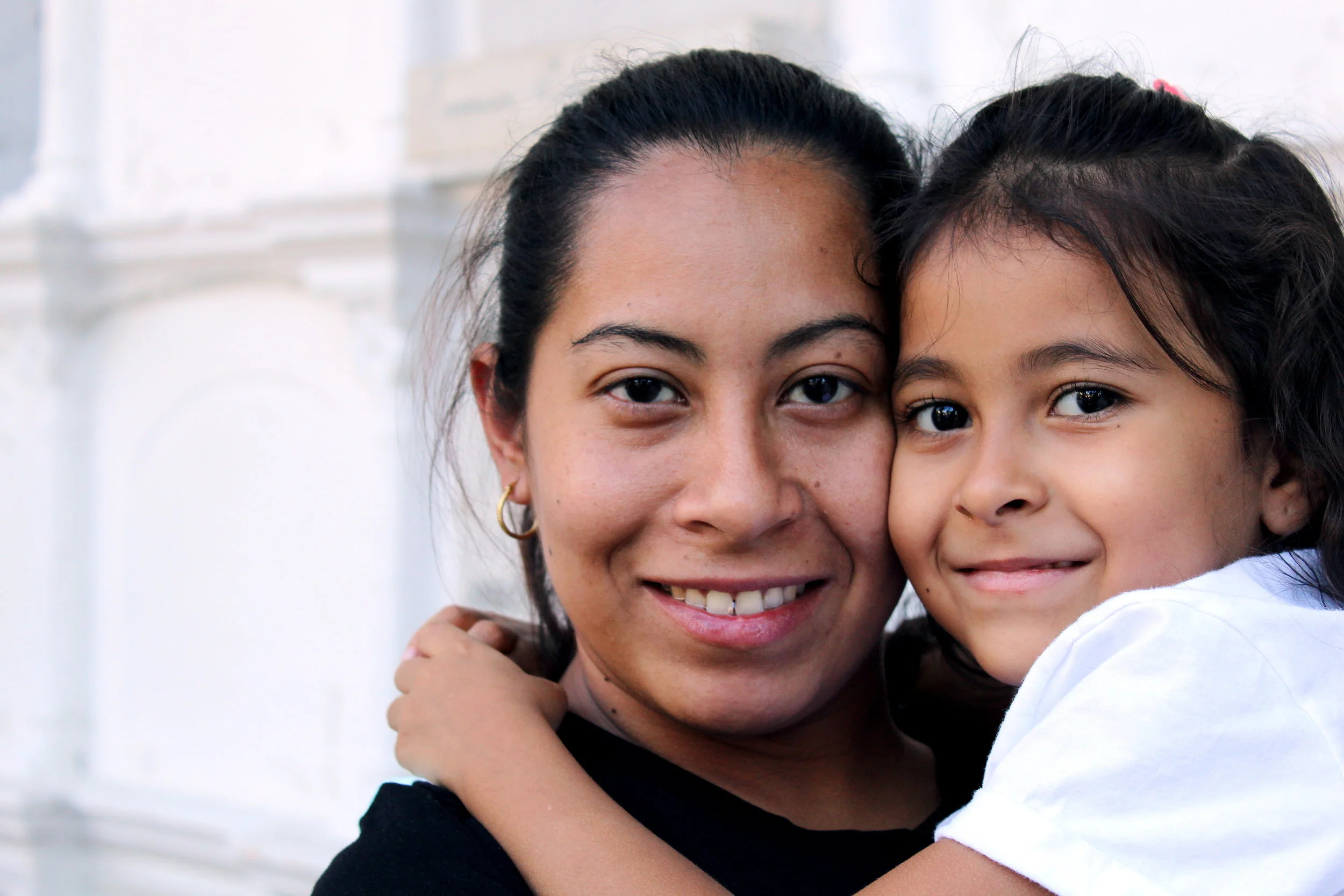
Today, we celebrate the Festival of the Christian Home in the United Church of Christ, and we celebrate Mother’s Day in our churches and in our homes, all across the United States, Canada, Mexico, Nicaragua, Australia, New Zealand, India, China, Japan, the Philippines and South Africa.
This is an occasion when people pause to reflect on the importance of nurture and those who nurture us in our families of origins and our childhood homes and current homes. Increasingly, as an occasion to recognize, honor, and express appreciation to those in our families of origin (or our families of choice) as “Other Mothers” and “Community Mothers.

2020.05.03 | Define Church
What is worship? Is it that ritual that we participate in on Sunday mornings in the main Sanctuary? Is it a Google Watch Party that we tune into at 10 a.m. on Sundays?
Does shared space and time matter anymore, given that Sunday worship is posted on the Church webpage, and you can hit play at 10 a.m. or 10 p.m. or any other time or day of the week?
Today, the COVID crisis challenges us to reflect deeply on what it means to be the Church as a people--a people scattered.

2020.04.26 | Stay with Us
What the risen Christ has shown us this Easter season is two-fold: 1) while we are in dire need of a better wealth distribution, all people and corporations are capable of so much more benevolence than we have ever imagined and 2) we may, with the help of technology, be capable of working and living and caring for the most vulnerable in ways that are more protective of our natural environment, steward our limited resources, and result in a more equitable situation for all of God’s creation.

2020.04.19 | Room for Doubt
Many of us were led to believe that doubt is incompatible with the Christian life, but I disagree. In fact, I believe that doubt—even apathy—can be a beneficial--perhaps even essential part--of a mature faith.
I believe that character whom we have come to know as Doubting Thomas has been largely misunderstood, and inappropriately maligned by many preachers who have presented him as a flawed apostle.
While it’s easy to understand how eyes and hearts gravitate toward this negative view of Thomas, several leading New Testament scholars argue that John had a larger purpose in mind when he put these words on Jesus’ lips: “Blessed are those who have not seen and yet have come to believe.”